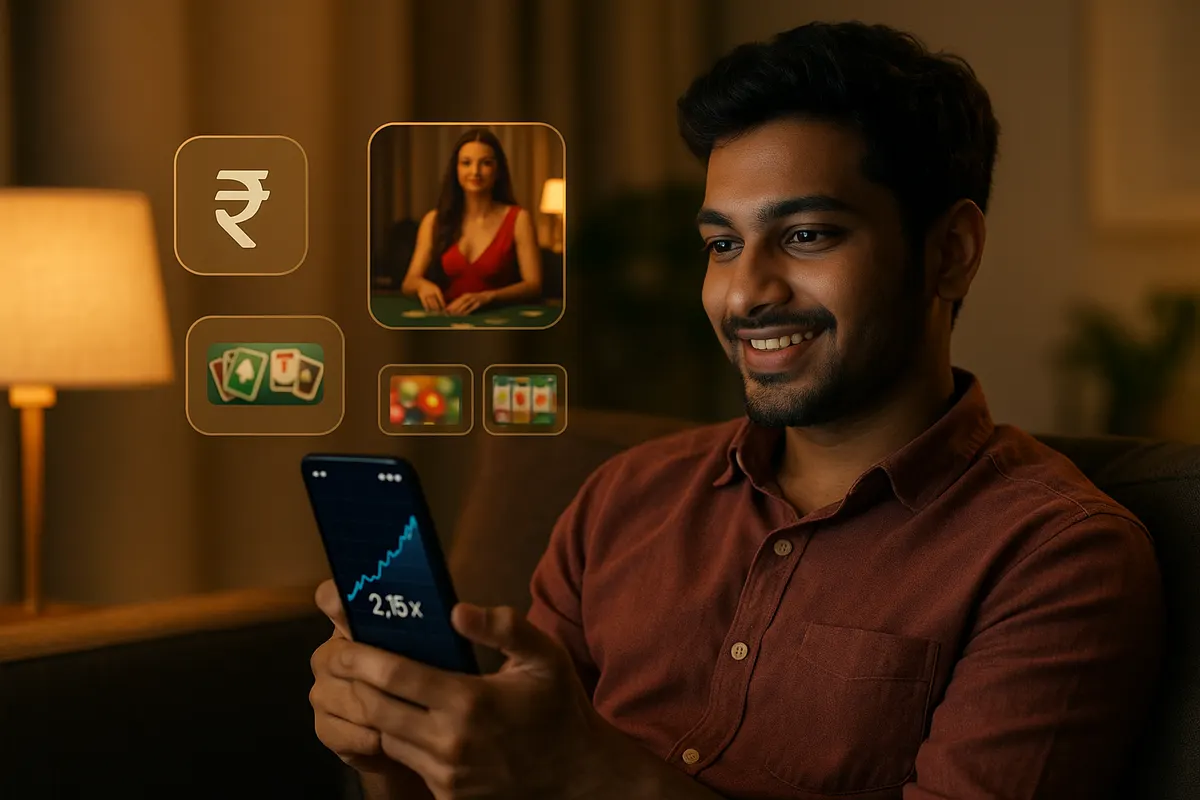
It’s 9:40pm on a Thursday. Rohit drops ₹500 into his casino account by UPI, waits about eight seconds for the balance to update, and opens Aviator. Four rounds in, he cashes out at 1.8×, loses the next two, then switches to a live Andar Bahar table because the lobby’s “Recommended for you” row is showing him the same six slots it showed him last week. At some point an email lands offering 50 free spins on a game he has never played. He ignores it.
That session is the baseline. And it’s the reason the new SOFTSWISS iGaming Trends 2027 report is worth a player’s attention, even though it was written for operators. Strip out the business language and the report’s themes describe a fairly specific set of changes to exactly that Thursday night: what games sit in the lobby, how fast the money moves, and how much the site actually knows about Rohit.
What the report is, and why players should care
SOFTSWISS is a technology supplier, not a casino. It builds the platforms that many online casinos run on, which means its annual trends report is essentially a map of what operators are planning to buy and build next. The 2027 edition, produced with WorldGaming, is the fifth in the series, and it’s available as a free download from the SOFTSWISS reports page.
The methodology is unusually broad for industry research: a survey of more than 500 experts plus analysis of over 480,000 media headlines. This year also adds a chapter called “Beyond iGaming”, which benchmarks the sector against e-commerce, sports, film, video games, streaming, digital pharma and crypto on market size, growth, regulatory burden and digital maturity, with outside input including Amazon Web Services.
That last detail matters more than it sounds. When an industry starts measuring itself against streaming platforms and e-commerce, the features it copies are the ones you already know from Netflix and Amazon: personalised front pages, one-tap payments, and interfaces that remember you. Which is roughly the shape of what’s coming.
The four iGaming trends that actually reach your screen
Most industry trend talk is backend plumbing. These are the four shifts a player will genuinely notice:
- Fast-round games keep taking lobby space. Crash games, instant win titles and hybrid formats are no longer a niche tab. Expect them front and centre, with more variations on the mechanic.
- Money moves faster in both directions. Instant deposits are already normal in India via UPI. The real change is withdrawal speed, and how much of KYC gets handled before you ever request a cashout.
- The lobby stops being one-size-fits-all. AI-driven recommendations, bonus offers matched to what you actually play, and interfaces that reorder themselves around your habits.
- Live and mobile converge. Live dealer tables designed for a vertical phone screen first, with lighter streams and game shows built around interaction rather than pure card dealing.
Note what isn’t on that list: better odds. None of these trends change the house edge. A 96% RTP slot with a beautiful personalised interface is still a 96% RTP slot, and a crash game with a slicker cash-out button still has the same built-in margin. Innovation changes the experience, not the math.
New game types and mechanics arriving in the lobby
Crash games and the instant-win evolution
Rohit’s Aviator habit is the clearest example of crash games growth. The appeal is obvious once you’ve played a few rounds: you understand the game in ten seconds, a round typically lasts about 8 to 30 seconds, and you decide when to stop rather than waiting for reels to land. Studios have noticed, and the format is splitting into sub-genres, mining and crate-opening variants, multiplier ladders, crash games with side bets and shared jackpots, and multiplayer rounds where you can see other players’ cash-outs in real time.
Two practical things to keep in mind as more of these land. First, the social layer is designed to influence you. Seeing someone else ride to 12× is not information about your round; each round’s outcome is independently generated, and the previous crash point tells you nothing about the next one. Second, speed is the risk. A game whose rounds last about 8 to 30 seconds lets you place far more bets per hour than a slot, which compresses variance and spend into a much shorter window. Auto cash-out and session limits exist precisely for this. If you’re newer to the format, our guide to crash games and how the multiplier works covers the mechanics properly.
Skill-flavoured and hybrid formats
The other visible direction is games borrowed from video game design: levels, missions, collectible progress bars, tournaments, and titles where you make decisions during a bonus round instead of watching it play out. Some of it genuinely involves player choice; a lot of it is presentation layered over a random outcome.
Be honest with yourself about which is which. In a true skill element, your decision changes the expected result, as with blackjack strategy. In a cosmetic one, picking which chest to open feels like a choice but the outcome was determined by the RNG. Both can be fun. Only one is affected by getting better at the game.
Payments: what changes at deposit and cashout
For Indian players, the deposit side is already close to solved. UPI clears in seconds, and most sites support it alongside cards, net banking and wallets. The future of online gambling in payments is really about three things: withdrawal speed, verification timing and currency choice.
Expect more casinos to push KYC to the front of the journey, verifying identity at signup rather than at the first withdrawal request. It’s a mild annoyance on day one and a significant improvement on the day you want your money. Expect faster payout targets as a competitive selling point, plus clearer status tracking so you can see whether a cashout is pending review or already sent.
Crypto is the other thread the report’s cross-sector comparison hints at, since it benchmarks iGaming against the crypto sector directly. Some operators run crypto rails for speed and lower processing costs. For a player in India, that’s a trade-off rather than an upgrade: faster settlement and fewer intermediaries, against price volatility, fees and a murkier tax and compliance picture. Winnings from online gaming are taxable in India and TDS applies on net winnings regardless of how you were paid, so treat “crypto casino” as a payment choice, not a workaround. Compare the practical differences in our breakdown of casino payment methods for Indian players.
Personalization: when the lobby starts guessing what you want
Casino personalization is the trend with the biggest gap between what players get today and what the technology already allows. Today, “recommended games” often means “popular games”. Next, it means the lobby reorders itself based on the volatility you actually tolerate, the stake sizes you use, the session lengths you prefer and the games you abandon after two spins.
Bonuses get the same treatment. Instead of a blanket 50-free-spins email, offers get matched to your play: cashback if you’re a table player, spins on games close to what you already like, wagering terms segmented by player value. Practical upside, less junk in your inbox and offers you might actually use. Practical caution, the terms still decide whether an offer is worth taking. A personalised bonus with 40× wagering and slot-only game weighting is not a better deal than a plain one at 20×. Read the rollover number first, every time.
The same data also powers responsible gambling tools, and this is where personalization earns its keep. Systems that flag chasing behaviour, prompt a reality check after a long session, or surface deposit limits at the right moment are already in use at bigger operators. If a site offers deposit, loss and session limits, set them before you need them.
Mobile and live gaming enhancements
Among the online casino trends aimed squarely at phones, the practical wins are unglamorous: lighter apps, faster load on patchy 4G, vertical live dealer streams that don’t crop the table, and video that adapts when your connection dips instead of freezing mid-hand.
On the live side, the growth is in game shows and Indian-format tables, Teen Patti and Andar Bahar variants with side bets, multi-camera angles and chat. Studios are also experimenting with multi-table views and one-tap bet repeats, which matter a lot when you’re playing on a 6-inch screen. If you mostly play on mobile, our mobile casino guide covers what to check before you commit an account to an app.
A realistic timeline for players
The report is a planning document, not a release calendar, so the table below is our editorial read on how fast each change reaches ordinary players, based on how widely the feature already exists today. Treat it as a rough guide.
| Change | Where it stands now | When most players will see it |
|---|---|---|
| Crash and instant-win games as a main lobby category | Already standard at most India-facing sites | Now, with more sub-genres through 2026–27 |
| Instant UPI deposits | Widely available | Now |
| Upfront KYC and faster withdrawal targets | Rolling out unevenly; varies a lot by operator | Gradually through 2026–27 |
| Genuinely personalised lobbies and offers | Basic versions live at larger operators | Mainstream by 2027 |
| Mobile-first live dealer and Indian-format game shows | Expanding studio output now | Steady additions each quarter |
| Skill-influenced and hybrid game formats | Early, experimental | Later; slower and more regulator-dependent |
Anything touching regulation moves slowest. India’s rules for online real-money gaming continue to evolve, and platform features often arrive here after they’ve launched in Europe or Latin America.
FAQ
What are the biggest iGaming trends for 2027?
For players: fast-round games like crash and instant win taking more lobby space, faster and better-verified payments, AI-driven personalization of games and bonuses, and live dealer content built for phones first.
How will online casinos change by 2027?
Mostly in feel rather than fundamentals. Lobbies will be tailored to you, cashouts should get quicker and more transparent, and live tables will look better on mobile. Game odds, RTP and the house edge won’t improve.
What new casino games are coming in 2027?
More crash game variants and social multiplier formats, instant-win titles, game-show style live tables, Indian card game variants with new side bets, and early hybrid games that mix video game progression with random outcomes.
Will payment methods change in online casinos?
Deposits are already instant for most Indian players via UPI. The bigger shift is on withdrawals: identity verification handled at signup, clearer payout tracking, and quicker settlement. Crypto options will grow but bring their own volatility and tax considerations.
Back to Rohit. By 2027 his Thursday session probably looks like this: verified account, a lobby that leads with the crash and live tables he actually plays, a cashback offer instead of irrelevant free spins, and a withdrawal that lands the same evening. All real improvements. None of them change the fact that the house holds a mathematical edge on every round, which is why the most useful feature on that whole list is still the deposit limit. Set one, decide your stake before you open the app, and treat everything else as entertainment spending. If gambling stops feeling like that, use the cool-off and self-exclusion tools your site is required to offer.