What match manipulation in football actually means
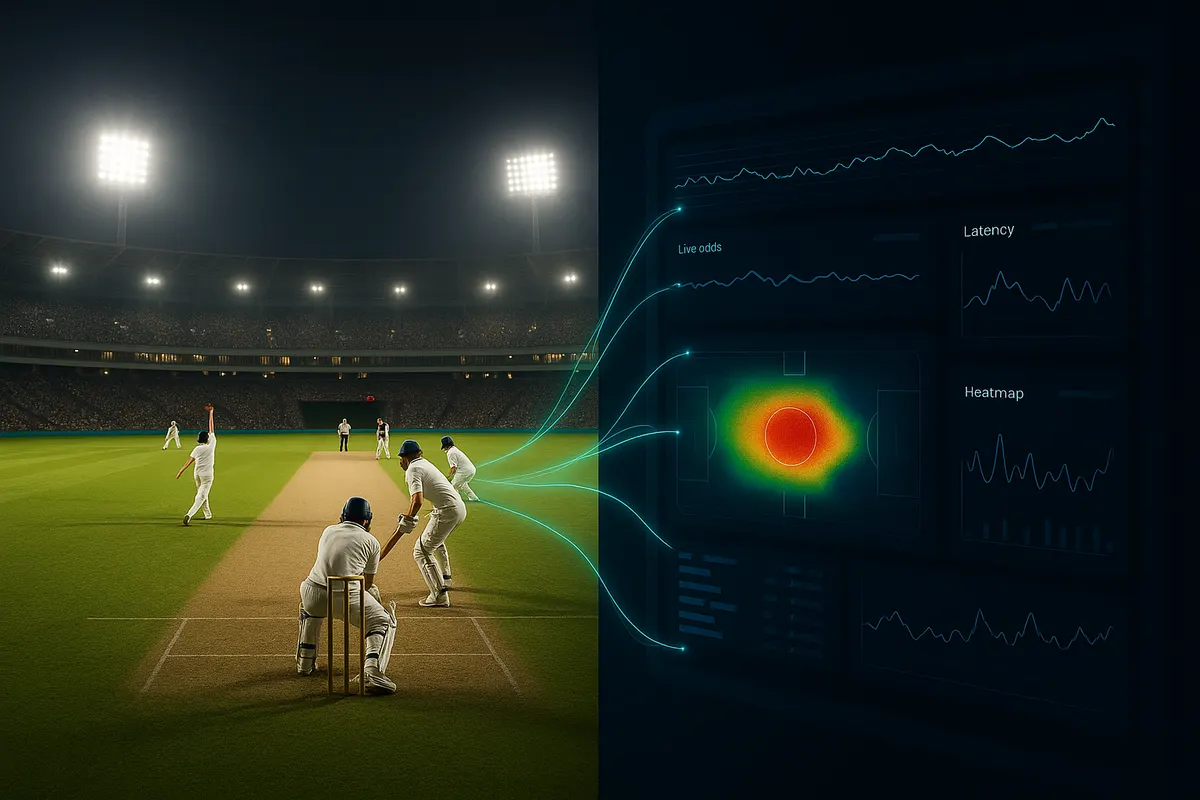
A second-division match in an empty stadium. The score is settled, nothing is riding on it, and in the 84th minute a defender clatters an opponent in the box for a penalty nobody needed to concede. On the pitch it looks like fatigue. On a monitoring screen in another country, it looks like the third unusual event in a match that attracted six times its normal betting turnover.
That gap between what you see and what the data sees is the whole story of match manipulation in football. Manipulation means deliberately influencing the course or outcome of a match for an improper purpose, most often to profit from bets placed on a result the fixer already knows. It is a broader term than “match-fixing”: fixing usually implies the final result is arranged, while manipulation covers everything down to a single throw-in.
Not all manipulation is betting-driven. A club might arrange a favourable result to avoid relegation or influence a title race. But the commercial engine is betting, and it is large. In Uganda’s 2024 case, the football federation’s legal manager Denis Lukambi said 99% of the fixing activity under investigation was betting related, with money staked both inside Uganda and abroad.
Spot-fixing versus result manipulation
The distinction matters because the two leave very different footprints.
| Type | What is arranged | Markets typically targeted | People needed |
|---|---|---|---|
| Spot-fixing | An isolated in-game event: a yellow card, a corner, the timing of a throw-in, a first-half score | Cards, corners, in-play props, half-time markets | One or two players, or a referee |
| Result manipulation | The final outcome or margin | Match result, Asian handicap, over/under goals | Several players, often a goalkeeper or defenders |
| Officiating manipulation | Decisions: penalties, cards, added time | Penalty, cards, handicap, in-play | A referee, sometimes with assistants |
| Institutional manipulation | A result agreed for sporting or financial reasons | Often none, or thin local markets | Club officials, administrators |
Players, officials and outside parties
Players can change a scoreline but rarely control it precisely; that makes them better suited to spot-fixing than to guaranteed results. Referees are the more efficient target, because one official can deliver a penalty, a red card or three minutes of added time without needing anyone else’s cooperation. That is why the Ugandan case was so striking: of the 13 people provisionally suspended by the Federation of Uganda Football Associations (FUFA) in June 2024, ten were referees, alongside two administrators and one player.
Behind both sits the third group: the syndicates. Moses Swaibu, a former professional footballer who was convicted in England’s fixing scandal and now runs sports integrity firm GC360, is blunt about who is doing the approaching in Africa. They are not “local opportunists”, he told iGaming Business. “They are international, sophisticated and they understand the market.”
How football corruption is organised on the ground
Recruitment starts with financial pressure, not greed
Swaibu, whose integrity education work has involved FIFA, UEFA, the FA, the Premier League and the PFA, describes the entry point in terms that undercut the usual assumptions. “The entry point is always the same. It is not greed. It is financial vulnerability,” he said. “A player or a referee who cannot pay their rent is easier to recruit than one who wants a Ferrari.”
He also speaks from both sides of it: “I was a professional footballer who was recruited, and then I did the recruiting. I know how the grooming works because I did it.” Grooming is the right word. The first contact is usually social rather than transactional, a fixer or intermediary who covers a bill, lends money, becomes a friend. The ask comes later, framed as small and harmless. In FUFA’s later disciplinary rulings, one former player, Feni Ali, received a lifetime ban after the federation said he had acted as an intermediary between players and fixers, which is exactly that middle-man role.
What manipulation looks like on the pitch
Fixers prefer events that are deniable. A goalkeeper who stands a half-step wrong. A deliberate handball or a cynical tackle that earns a card at an agreed point in the game. A missed penalty. A defender who concedes a corner from a routine clearance. In institutional cases the pattern is blunter, such as the Uganda Premier League match between Lugazi FC and Buhimba United Saints that finished 5-2, over which FUFA’s Ethics and Disciplinary Committee found four players and a club administrator guilty of manipulation.
Money, leverage and threats
Payments are typically modest by European standards but meaningful against a lower-league wage, and they are usually staged: part up front, the rest on delivery. Once a payment is accepted, the relationship changes. The player now has something to hide, and the same evidence that could expose him becomes the tool used to keep him involved. That escalation from favour to coercion is why integrity education programmes push players to report the first approach rather than the third.
Why African football manipulation draws extra scrutiny
Economic vulnerabilities
Manipulation concentrates where the money in the game is smallest and the money on the game is largest. Second divisions, youth competitions and women’s football often combine low or irregular wages with live data feeds sold to global betting markets. The seven matches targeted in FUFA’s 2024 investigation were in Uganda’s men’s second division and in women’s football, not the top flight. Swaibu says the pattern mirrors what he saw in England: the risk sits below the level where salaries insulate players.
Governance challenges
Weaker governance does not mean absent governance, but investigations need resources: forensic access to phones and bank records, witness protection, legal capacity to run disciplinary cases against multiple defendants, and cooperation from betting operators in other jurisdictions. Where any of those links is thin, cases stall. Swaibu’s assessment is worth quoting directly: “What we can say with confidence is that the infrastructure to detect manipulation is strengthening in Africa faster than the infrastructure to prevent it.”
Recent regulatory action
Uganda, Mali and Kenya have all moved to strengthen their responses to manipulation and betting-related integrity risk. FUFA’s own record shows what enforcement looks like when it works: FIFA extended worldwide sanctions against seven Ugandans already punished domestically, with five players banned for five years and two referees for ten. In November 2024, FUFA’s Ethics and Disciplinary Committee sanctioned a further 12 people over a scheme linked to a foreign betting syndicate, including one lifetime ban and bans of one to ten years for the rest.
One caution before reading rising alert numbers as a rising problem. Swaibu argues the opposite is often true: “Rising alert volumes do not automatically mean rising manipulation. They often mean monitoring is getting better.”
How match fixing detection works
Detection rarely starts with the football. It starts with the money, because manipulation requires someone to place large bets on an unlikely outcome, and that is hard to hide.
Betting pattern analysis
Monitoring systems build a baseline for every market: how much a Ugandan second-division fixture or an Indian lower-league match normally turns over, from which regions, in what stake sizes. Alerts are triggered by deviation from that baseline, such as turnover far above normal on a low-profile game, a cluster of accounts backing the same obscure market within minutes, unusually large stakes from customers with no history in that competition, or heavy money on a half-time scoreline rather than the result.
Odds movement monitoring
Prices move for reasons: team news, weather, a suspension. When a line shortens sharply across multiple bookmakers with no public information to explain it, that is a flag. Analysts look at the direction and speed of the drift, whether it was led by a single exchange or a specific regional market, and whether in-play prices behaved oddly around the moment in question. Odds manipulation of this kind is visible precisely because bookmakers react to money.
Cross-border intelligence sharing
An alert is only useful if it reaches someone who can act. Integrity units inside federations and confederations, operator-funded monitoring networks such as the International Betting Integrity Association, and commercial monitoring providers contracted by sports bodies pass suspicious betting reports to regulators, federations and, where criminality is suspected, to police. FIFA’s ability to extend a national ban worldwide, as it did with the Ugandan cases, is the enforcement end of that chain. The Council of Europe’s Macolin Convention exists to give countries a common legal framework for exactly this cooperation.
What protects bettors when a match is compromised
Operator safeguards
Licensed sportsbooks have commercial reasons to care, since they lose money to fixers. Their standard defences include suspending or closing markets when patterns look wrong, reducing limits on low-tier competitions, dropping high-risk markets such as cards and corners in minor leagues, and reserving the right in their terms to void bets on markets later found to have been manipulated. Read that clause before you need it, because the conditions and the time window vary considerably between operators.
Regulatory protections
Licensing conditions in regulated markets typically require operators to monitor for suspicious betting, report it, keep auditable records and cooperate with investigations. That reporting duty is the reason many cases surface at all. For bettors in India, where the legal position varies by state and many international sites operate without a domestic licence, the practical consequence is that your protection depends on the strength of the licence your operator actually holds. It is worth understanding how to gamble responsibly and how licensing works before you judge a site by its welcome offer.
Industry partnerships
Data-sharing agreements between leagues, monitoring firms and betting operators, plus player education programmes run by federations and unions, cover the two halves of the problem: catching manipulation after it happens and reducing the number of people willing to take the first call.
How bettors can spot a potentially compromised game
You will not identify a fixed match reliably from your sofa, and anyone claiming otherwise is selling something. What you can do is recognise elevated risk and stay away from it.
- A sharp, unexplained price move on an obscure fixture, especially a large drift with no team news behind it.
- Markets suspended or withdrawn for one specific fixture while similar matches trade normally.
- Bookmakers offering unusually low limits, or refusing niche markets, on a game they would normally price freely.
- Competitions with no meaningful stakes: dead-rubber fixtures, pre-season friendlies, low-tier and youth matches with thin coverage.
- Vague or contradictory team news, late squad changes, or a match relocated at short notice.
- Tips arriving with certainty attached. “Guaranteed” information is either false or an invitation to join a crime.
Official integrity alerts are the more reliable signal. Federations, confederations and FIFA publish disciplinary decisions and bans, and monitoring bodies publish periodic reports on suspicious betting by sport and region. Following those sources tells you which competitions are under active scrutiny.
The practical habits are unglamorous and they work: stick to licensed operators with published integrity policies, favour major competitions with deep liquidity, avoid obscure in-play props in leagues you cannot research, keep stakes small enough that a voided or lost market does not matter, and read the rules on voided bets before you place one. Sports betting fairness is never guaranteed, and manipulation is one risk sitting on top of the built-in bookmaker margin you are already paying.
Bet only what you can afford to lose, set deposit and loss limits, and use self-exclusion tools if betting stops being entertainment. If gambling is causing you harm, seek support from a qualified helpline or counselling service.
Frequently asked questions
How does match fixing work in practice?
A fixer or intermediary recruits a player, referee or official, usually by exploiting financial pressure rather than greed, then agrees on a specific deliverable: a card, a penalty, a half-time score or a final result. Associates place bets on that outcome, often spread across several operators and countries to avoid triggering alerts.
Why is African football targeted?
Because low or irregular pay in lower divisions, youth football and women’s football coexists with live data feeds sold into global betting markets, and because investigative and preventive resources are still catching up with detection capability. FUFA’s Uganda cases involved a syndicate the federation described as South Africa-based, and international networks are often behind approaches.
Can I tell if a match was fixed?
Not with confidence, and not in advance. Confirmation comes from disciplinary hearings or criminal proceedings, months or years later. What you can observe is risk: thin markets, strange price moves, suspended betting and competitions with nothing at stake.
Will I get my money back if a match I bet on was manipulated?
Sometimes. Many licensed operators reserve the right to void affected markets, but the terms, evidence threshold and time limits differ by operator and licence. Check the rules of the sportsbook you use rather than assuming a refund.