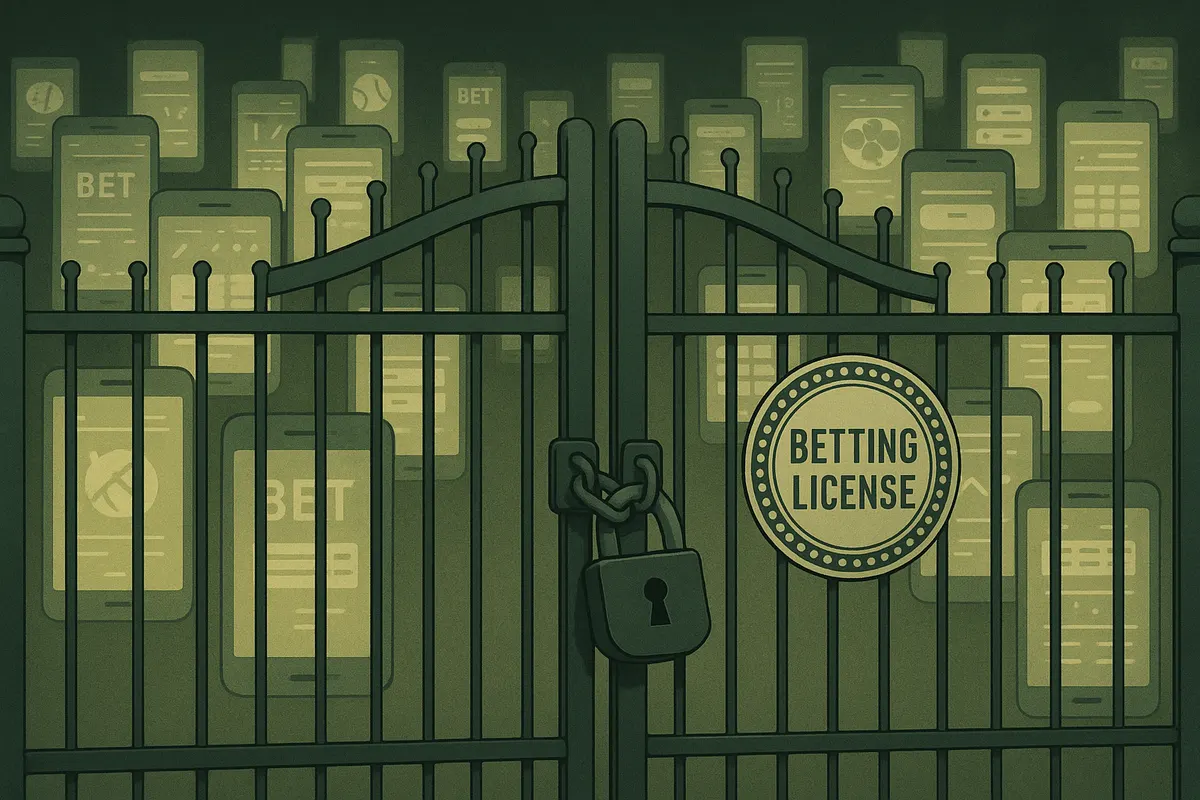
Thirty million reais. That is what an operator pays the Brazilian treasury for a five-year fixed-odds betting licence covering up to three brands, before it takes a single bet. That number, roughly the price of a small office block, is the clearest evidence that Brazil did not ban online betting. It priced entry to it. And yet the phrase “online betting ban” followed the Brazilian market into 2026, and followed the industry to the halls of SBC Summit Lisbon, where restriction policy was one of the conversations nobody could avoid.
The two things get conflated constantly, by politicians and players alike. A licence fee is a restriction. A prohibition is something else entirely. Understanding the gap between them tells you more about your own access, your KYC file and your safety tools than any bonus page ever will.
How Brazil got from grey market to licence list
Follow the sequence, because the sequence is the lesson.
For years, Brazilians bet online in a legal vacuum. Fixed-odds betting was authorised in principle by a 2018 law, but no licensing framework existed, so offshore sites served the market openly. They advertised on football shirts. They paid no Brazilian tax. They answered to no Brazilian regulator. If your withdrawal stalled, your only recourse was a support ticket sent to a company incorporated somewhere you could not find on a map.
That was not prohibition either. It was absence, which is the condition most prohibitions eventually produce.
Law 14.790, sanctioned at the end of 2023, closed the vacuum. From 1 January 2025 the Ministry of Finance’s betting secretariat began authorising operators, and the rules arrived with teeth:
- Operators pay a 12% tax on gross gaming revenue, and players’ net winnings are subject to income tax at 15% (treat the specifics as informational, not tax advice).
- Betting is restricted to adults, with identity verification tied to the bettor’s CPF number and biometric checks at registration.
- Deposits must come from an account in the bettor’s own name. Credit cards, cheques and cryptocurrency are out; PIX is in.
- Operators must offer self-exclusion and responsible gambling messaging, and cannot advertise betting as a source of income.
- Bonuses and advance credit to bettors are prohibited outright, a restriction that surprises anyone arriving from Europe.
Unlicensed sites did not get a transition period. Regulators moved to have their domains blocked and their payment rails cut.
What regulation changed for players, item by item
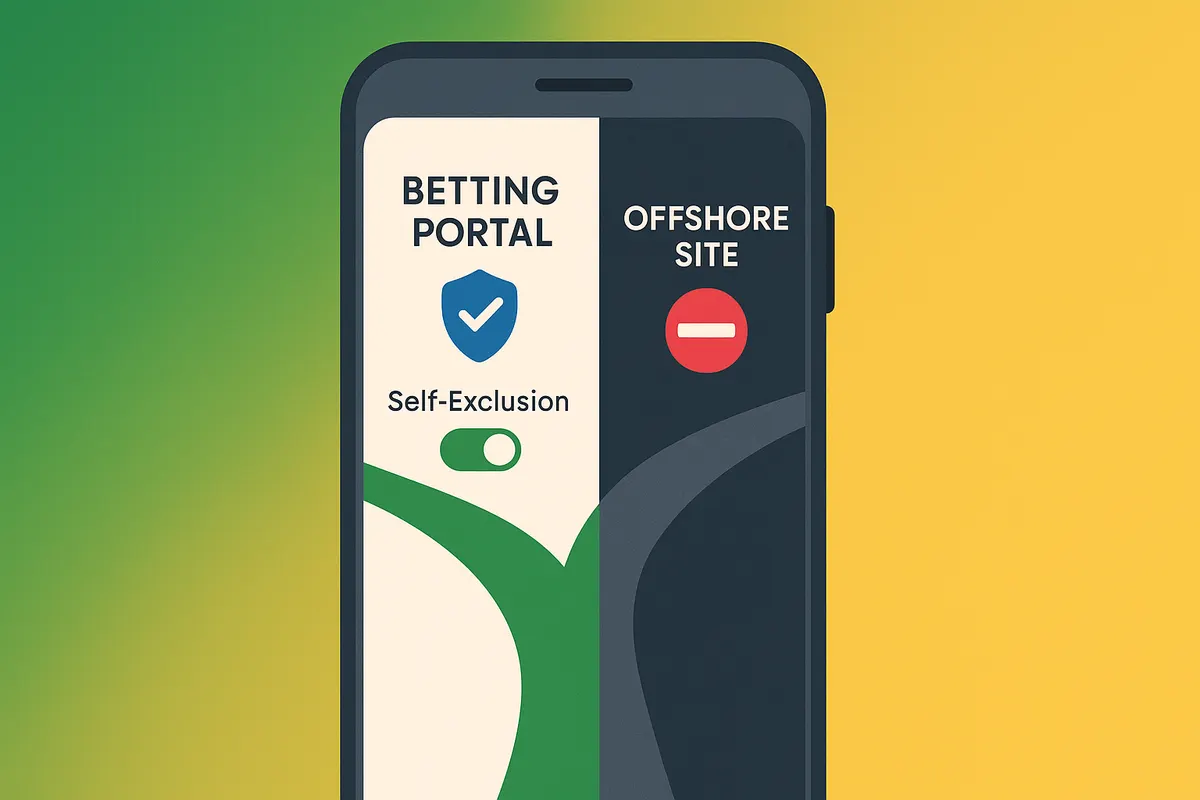
Strip out the politics and compare the two states of the same market. This is the practical difference between regulated gambling access and betting in a market where access exists but oversight does not.
| Player-facing element | Unlicensed or prohibited market | Licensed Brazilian market |
|---|---|---|
| Age and identity checks | Inconsistent, sometimes nominal | Mandatory CPF and biometric verification |
| Self-exclusion | Voluntary at best, not portable | Required feature, enforced by regulator |
| Payment traceability | Third-party accounts, crypto, cards | PIX from an account in the bettor’s own name |
| Complaint route if a payout is withheld | Offshore support desk only | Regulator and consumer law apply |
| Bonuses and free bets | Aggressively marketed, opaque terms | Prohibited under the licensing regime |
| Tax position | Undeclared and unclear | Defined rates for operator and player |
Not all of that is comfortable for players. Losing bonuses means losing the one product feature that ever carried real value for a disciplined bettor, and the identity checks mean a genuine paper trail. But notice which column contains the tools that actually reduce harm. They only exist where someone has the authority to demand them.
Why calls for an online betting ban keep returning
Regulation did not end the argument in Brazil. It intensified it.
Once betting was licensed, it became measurable, and the measurements unsettled people. Payment data showing how much household money flowed to betting apps, including money from low-income households, moved the debate from morality to economics. A parliamentary inquiry examined the sector. Constitutional challenges to the framework reached the Supreme Federal Court. Proposals to restrict advertising, restrict sports sponsorship, or prohibit online betting altogether kept surfacing in Congress.
That pattern repeats everywhere. Regulation generates data, data generates outrage, outrage generates prohibition bills. It is why the Brazil betting ban question still hung over an event in Lisbon in 2026, and why operators who had just paid eight figures for licences were discussing whether the ground under them would hold.
Gambling prohibition vs regulation: what each actually delivers
A ban removes the legal supply. It does not remove demand, and it does not remove supply.
Look at what happened to Brazil before 2025, or at any jurisdiction that has tried the blunt approach. Prohibition shifts play offshore, where the operator has no local licence to lose. That means no verified age checks, no national self-exclusion register, no deposit limits a regulator can audit, no advertising standards, no tax, and no arbiter when a balance is frozen. Payment blocking and domain blocking help at the margins, and they are worth doing, but a VPN and a crypto wallet are not hard to acquire. The bettor most likely to route around a ban is precisely the bettor already in trouble.
Regulation accepts the demand and attaches conditions to it. The trade-off is honest: the state legitimises an activity with a permanent mathematical disadvantage for the player, in exchange for the power to police how that activity is sold. Whether it polices well is a separate question, and Brazil’s own restriction on bonuses shows how far a regulator can go when it wants to.
There is a middle setting too, and it is the one most markets end up in. Keep the licences, tighten the betting market restrictions: sponsorship limits, advertising curfews, mandatory affordability checks, caps on stake sizes. Less dramatic than a ban and considerably harder to circumvent.
Reading restrictions as a bettor, not a lobbyist
When a headline announces a restriction in your market, work through four questions before deciding what it means for you.
- Is this a licensing change or a prohibition? A new tax, an ad ban or a deposit rule leaves the licensed market intact. A prohibition removes your legal counterparty.
- Does my operator hold a local licence? In Brazil, authorised brands appear on the government’s list. If your site is not on it, the consumer protections above do not apply to you, regardless of how polished the interface looks.
- Which safety tools survive the change? Self-exclusion and deposit limits are only enforceable against a licensee. If you rely on them, an offshore account is a downgrade you cannot undo.
- What happens to my money in transit? Payment blocking usually hits withdrawals from unlicensed sites first. Funds sitting in a grey-market wallet are the most exposed thing you own.
The uncomfortable constant across every version of this debate is the maths. A regulated sportsbook still builds a margin into its prices, and a licensed casino game still runs a house edge, which is simply 100% minus the RTP. Regulation changes who verifies your age, who handles your complaint and who can cut you off when you ask to be cut off. It does not change the fact that the house holds the long-run advantage. No restriction, and no absence of restriction, ever has.
If betting has stopped being entertainment, use the self-exclusion and limit tools your licensed operator is obliged to provide, and contact a local support service. Those tools are the single most concrete thing regulation buys you, and they are worth more than any promotion.
Frequently asked questions
Is online betting banned in Brazil?
No. Brazil licensed and taxed online fixed-odds betting from 1 January 2025 under Law 14.790. Unlicensed operators are the ones targeted for blocking. Political proposals to prohibit betting have been debated, but the licensed market has been operating.
What is the difference between gambling prohibition and regulation?
Prohibition bans legal supply and leaves demand to offshore sites with no local accountability. Regulation permits supply under enforceable conditions: age and identity verification, self-exclusion, payment rules, advertising limits and taxation.
Do bans stop people from betting?
They reduce visible, convenient access and cut tax revenue, but evidence from grey markets shows determined players migrate to unlicensed sites. That migration strips away the protections a licensed market imposes.
Why does Brazil prohibit betting bonuses?
Its licensing framework bars operators from granting bonuses or advance credit to bettors, on the view that promotional credit encourages spending beyond a player’s means. It is a restriction inside regulation, not a ban on betting itself.